Travelling with a disability: Tips to make your trip easier

Travel is for everyone – and having a disability shouldn’t stop you getting away. Whether it’s a weekend in Italy or Spain, or a longer trip further afield, there’s no reason you can’t enjoy it.
It might take a bit more planning, that’s all. Not loads – just enough to make things easier on yourself. With the right prep and a clear idea of what to expect, you can avoid a lot of stress and focus on the good part – the trip itself.
Here’s how to get started.
Start with a bit of planning
We all like the idea of booking a last-minute trip and heading off. But when you’re travelling with a disability, a bit of forward planning really helps. Think of it as setting yourself up for an easier trip – not overthinking it.
A few simple things you should do:
- Check in with your doctor – It’s worth having a quick chat before you travel. Ask about medication, time zones, or anything specific to your destination.
- Be clear on what you need – Write down your accessibility requirements – whether that’s a roll-in shower, step-free access, or help at the airport.
- Look into your destination – Accessibility can vary a lot from country to country. A bit of research now can save stress later.
- Give yourself extra time – Airports, transfers, check-ins – things can take a bit longer. A buffer makes all the difference.
- Have your paperwork ready – Medical letters, prescriptions, equipment details – keep everything in one place.
It’s not about worrying. It’s about making things easier for yourself.
Know your rights before you travel
If you’re travelling in Europe, there are clear rules in place to support you. They’re there to make your journey easier, not more complicated.
For air travel, EU Regulation 1107/2006 sets out what airlines and airports must do to assist passengers with disabilities or reduced mobility. Here’s what that means in practice.
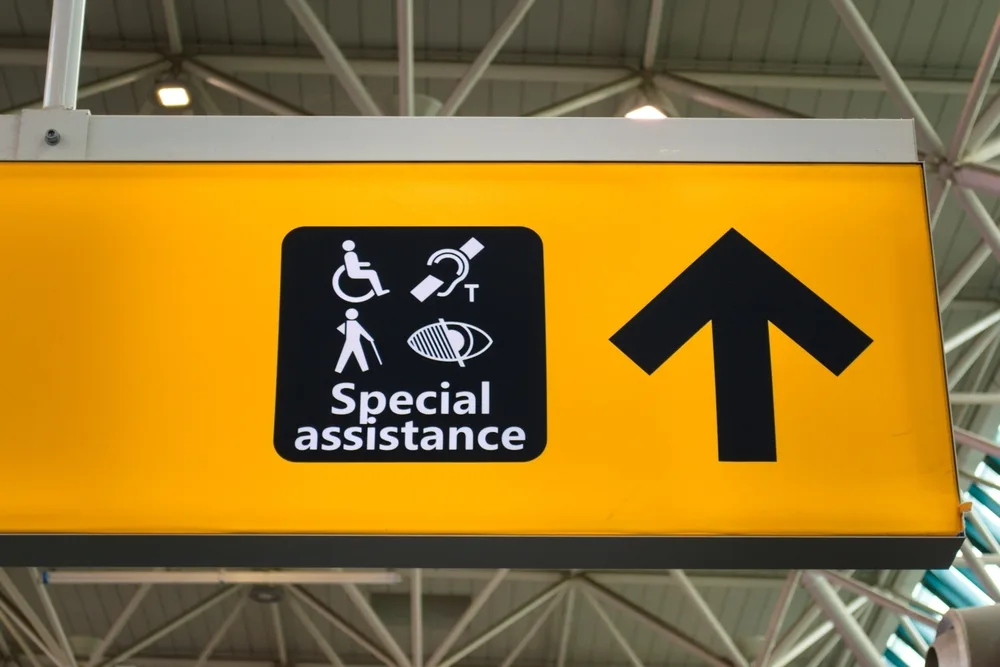
What help you can expect at the airport
You can request free assistance from the moment you arrive at the airport. This can include:
- Help getting from the entrance to check-in
- Support through security and passport control
- Assistance getting to your gate
- Priority boarding so you’re not rushed
Once you land, the same support should be available to help you get off the plane, collect your bags, and exit the airport.
Get help while on the plane
Airlines should also support you during your flight, which may include:
- Help getting to your seat
- Assistance storing mobility aids or equipment
- Support during boarding and disembarking
Cabin crew can help with certain tasks, but it’s worth noting they can’t provide personal care (like eating or using the toilet), so plan ahead if you need that level of support.
Travelling with mobility aids and medical equipment
You’re allowed to travel with essential equipment, including wheelchairs and medical devices. In most cases:
- Mobility aids are carried free of charge
- You can bring up to two mobility aids (subject to space and safety rules)
- Medical equipment can usually be taken onboard, if approved in advance
If something goes wrong – for example, if your wheelchair is damaged – airlines are responsible for handling complaints and may need to compensate you, depending on the situation.
The 48-hour rule (and why it matters)
To make sure everything runs smoothly, you should request assistance at least 48 hours before your flight. This gives the airline and airport time to organise the right support and equipment for you.
If you don’t give notice, they’ll still try to help, but it may not be as smooth or guaranteed.
Your rights on trains, buses and coaches
Air travel isn’t the only place these protections apply. Across Europe, similar rules are in place for:
- Trains – assistance getting on and off, and help in stations
- Buses and coaches – support boarding, priority seating, and accessible information
In many cases, you may need to give advance notice (often 24–48 hours), especially for longer journeys.
Can a travel provider refuse you?
In most cases, no, they can’t. Airlines and transport providers generally can’t refuse to carry you just because you have a disability. There are a few limited exceptions – usually related to safety or if the aircraft or vehicle simply can’t accommodate specific equipment.
But if this happens:
- They must explain the reason clearly
- You can ask for it in writing
- You can challenge the decision or seek advice if it doesn’t feel right
- A simple way to think about it
These rules are there to make travel fair and accessible – not to create extra steps for you.
The key things to remember:
- Let providers know what you need in advance
- Be clear about your requirements
- Don’t be afraid to ask questions
You’re entitled to support – and knowing that makes travelling a whole lot easier.
Flying: what to expect step-by-step
Flying can feel like the most stressful part of a trip, but once you know what to expect, it’s much more manageable. Here’s how it usually works, from booking to landing.
Before you book
Not all airlines handle accessibility in the same way. Some make it very straightforward, others less so. Before booking, take a few minutes to check:
- What assistance services they offer
- Their rules on mobility aids and batteries
- How they handle medical equipment
If the information is easy to find and clearly explained, that’s a good sign. If it’s buried or vague, it might be worth reconsidering.
Booking and requesting assistance
This is one of the most important steps. You’ll need to let the airline know what support you need at least 48 hours before your flight. When you do, be as clear as possible. It helps everything run more smoothly on the day.
You might be asked for:
- The type of assistance you need (e.g. help walking, wheelchair support)
- Details of your mobility aid (size, weight, battery type)
- Any medical equipment you’re bringing
- Your seating preference
It’s also a good idea to ask for confirmation by email. That way, you have a record if anything gets missed.
Arriving at the airport
Give yourself extra time – it takes the pressure off. Once you arrive, you can either:
- Go to a designated assistance point, or
- Head straight to the check-in desk
From there, staff will guide you through the airport. Additional support can include:
- Help with check-in and bags
- Assistance through security
- Getting you to your gate
- Priority boarding so you can get settled
If assistance doesn’t arrive when expected, don’t hesitate to check in with staff. You’re not being a nuisance – that’s what the service is there for.
Boarding the plane
Boarding is usually done early for passengers who’ve requested assistance. Depending on your needs, you might:
- Board using a ramp or lift
- Transfer to an aisle chair to reach your seat
- Get help settling in and storing your belongings
Take your time – there’s no rush.
During the flight
Cabin crew are there to help where they can, including:
- Assisting you to and from your seat
- Helping with luggage in overhead lockers
- Providing general support during the flight
They won’t be able to help with personal care, so it’s worth planning ahead if you need that level of assistance.
When you land
After landing, assistance continues. You can expect help with:
- Getting off the plane
- Moving through the airport
- Collecting luggage
- Reaching your onward transport
If you checked in a wheelchair, it should be returned to you as close to the aircraft door as possible.
Getting around once you arrive
Once you land, getting from place to place is the next part of your trip – and this is where things can vary a lot depending on the country. Some destinations are very accessible. Others are still catching up. A bit of research before you go can make things much easier when you arrive.
Public transport abroad
Accessibility standards aren’t the same everywhere. In some countries, you’ll find:
- Step-free access on trains and metro systems
- Clear audio and visual announcements
- Staff available to help at stations
In others, it might be less consistent. You could face limited access, older infrastructure, or fewer support services. Here are a few things that help:
- Check official transport websites before you travel
- Look for accessibility maps or station guides
- See if assistance needs to be booked in advance
Trains, metros and buses
In larger cities, public transport is often the easiest way to get around. That said:
- Not all stations may have lifts or step-free access
- Older systems can be harder to navigate
- Busy times can make things more difficult
If you’re unsure, it’s worth planning your routes ahead of time or having a backup option.

Taxis and ride services
Taxis are often the most straightforward option, especially if accessibility is a concern.
- Some cities have wheelchair-accessible taxis, but availability can vary
- Ride apps may offer accessible vehicle options, depending on the location
- Booking in advance is always a good idea
Hiring a car abroad
For more flexibility, you might want to consider hiring a car. If you need adaptations like hand controls:
- Book as early as possible
- Confirm exactly what’s included
- Double-check availability at your destination
Not all rental providers offer adapted vehicles, so it’s worth sorting this well in advance.
A simple way to approach it
Travelling with a disability might take a bit more organisation, but it shouldn’t stop you going where you want to go. A bit of planning, knowing your rights, and understanding what to expect can make all the difference. It means fewer surprises and more time enjoying your trip.
And when it comes to travel insurance, it’s about making sure you’ve got the right cover in place for you, especially if you have medical conditions or rely on equipment.

Get a quick travel insurance quote
Affordable travel insurance for all your needs
Discover the World
Stay up to date with the latest travel tips and advice

Explore the world, one quiz at a time

The best destinations to visit without needing a car